$300 billion. Gone. In 48 hours.
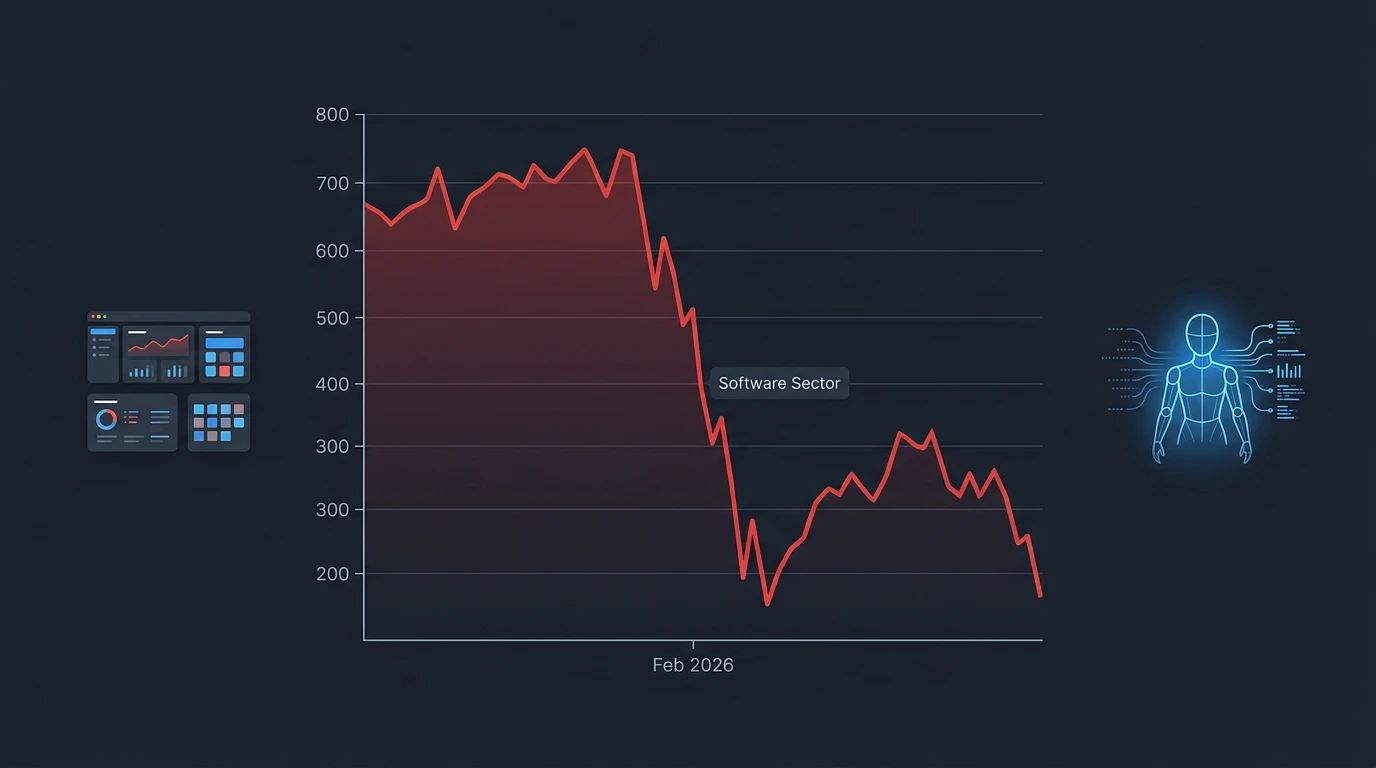
That’s what Anthropic’s Claude Cowork launch triggered on February 3–4, 2026 — the biggest stock selloff in tech history driven specifically by AI displacement fears. By late February, cumulative losses from the software sector had crossed $2 trillion. Traders coined a name: the SaaSpocalypse.
This isn’t another “AI is disrupting everything” think piece. The repricing is real, the structural threat is real, and the strategic decisions SaaS leaders make in the next 90 days are going to matter. Here’s what actually happened, what’s overblown, and what to do about it.
How We Got Here: The Timeline
The trouble had been building before anyone named it. Through late 2025, enterprise CIOs began signaling “budget exhaustion” after years of SaaS sprawl. A January 2026 CIO survey found IT budget growth decelerating to just 3.4% — and the internal shift was sharper: funds were moving away from application software toward the AI infrastructure buildout, which is projected at $600–$690 billion in 2026 alone.
Then two catalysts hit in quick succession.
First, Palantir’s Q4 2025 earnings call. CEO Alex Karp and CTO Shyam Sankar laid out a direct challenge to the entire enterprise software industry: AI isn’t just augmenting software, it’s replacing it. Their customer testimonial landed hard — “every other software must justify its existence, and so far they haven’t been able to.”
Then came Anthropic. On February 4, Claude Cowork launched publicly with full agent capabilities — autonomous legal audits, CRM pipeline management, code deployment, compliance workflows — without requiring a human in the loop. Within hours, the selloff went from sector-specific to indiscriminate. The iShares Expanded Tech-Software ETF (IGV) fell into a technical bear market, down more than 22% from its recent highs.
The 48-hour damage: ~$300 billion wiped from the Nasdaq Cloud Index. Salesforce, Workday, ServiceNow, and Adobe each dropped roughly 7% in the peak panic window. RELX fell nearly 20% in a single week. LegalZoom dropped close to 20%. By late February, the sector’s cumulative 2026 losses had exceeded $2 trillion.

The Actual Business Model Threat
Traders called it a SaaSpocalypse. What they were actually pricing in was a specific and serious structural problem: the per-seat model breaks when AI agents don’t need seats.
For two decades, SaaS revenue grew by selling licenses to human users. More headcount meant more licenses. The model was elegant, sticky, and highly predictable. AI agents shatter that correlation entirely. If one agent handles the work of ten employees, companies need far fewer seats. Worse, falling development costs mean more enterprises can now build custom agent solutions in-house rather than renewing contracts — the build-vs-buy calculus is flipping.
Klarna’s 2024 move to ditch Salesforce’s CRM for its own AI system was the preview. What was then a curiosity is now a playbook being studied in every enterprise IT department.
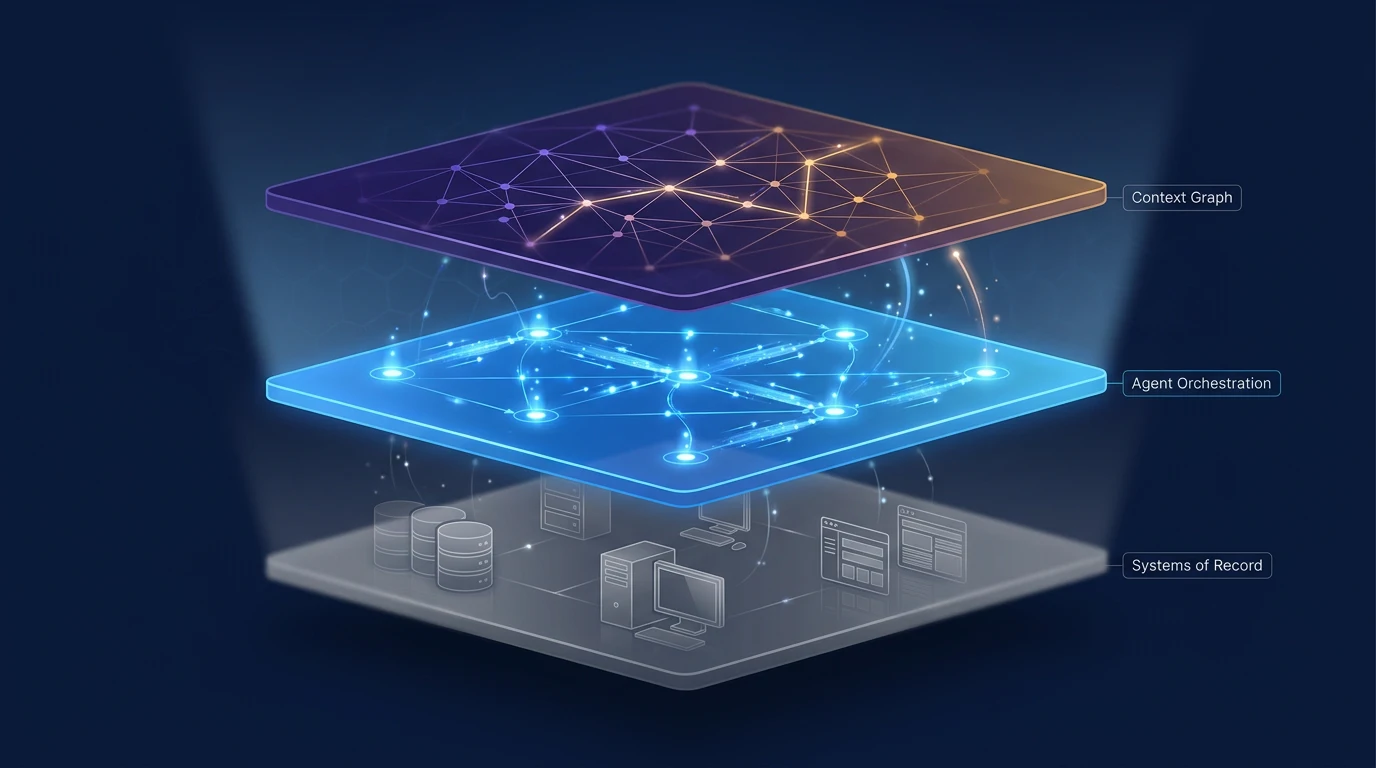
The deeper threat is what Foundation Capital calls the context graph problem: agents are becoming the interface layer, and if they are, then systems of record risk being reduced to “dumb databases” that agents query in the background. The moat that enterprise SaaS spent fifteen years building — trained users, deeply embedded workflows, switching costs — starts to erode when natural language becomes the interface and any well-trained agent can navigate your competitor’s system just as easily as yours.
AlixPartners estimates up to $500 billion in enterprise software revenue is at risk over time. IDC predicts pure seat-based pricing will be obsolete by 2028. Forward P/E multiples for the sector have already compressed from 39x to 21x; price-to-sales ratios have dropped from 9x to 6x, levels not seen since the mid-2010s.
What’s Overblown
The panic is real. The conclusion that SaaS is finished is not.
Bank of America’s senior analyst Vivek Arya called the selloff “internally inconsistent.” His argument: the market is simultaneously pricing in AI capex that destroys ROI and AI adoption so pervasive it renders existing software obsolete. Both can’t be true at the same time.
SaaStr’s Jason Lemkin, the closest thing the industry has to a godfather, put it more bluntly: nobody is building a homegrown CRM in Replit to replace Salesforce. Shipping a v1 is maybe 2% of the work. The other 98% — security, compliance, integrations, edge cases, support, governance — is why enterprise software contracts renew.
On February 24, Anthropic CEO Dario Amodei appeared on stage with Marc Benioff to articulate what he called a “Human-in-the-Loop” doctrine: Claude 4 was designed to augment enterprise tools, not route around them. The stabilization narrative gained ground almost immediately, and parts of the sector began recovering.
Salesforce’s own Agentforce product reached 18,500 customers in its first year — the fastest organic product adoption in company history. That is not the behavior of a category being disrupted into irrelevance. It’s an incumbent absorbing a new paradigm faster than the market expected.
And the total addressable market is not shrinking — it’s likely expanding. A16z’s Alex Rampell has argued that if AI graduates from enhancing productivity to actually completing work, the addressable market moves from roughly $350 billion in enterprise software to the $6 trillion white-collar services economy. Goldman’s strategist Ben Snider warns the shift could still mirror what happened to newspapers — a structural long-term decline even if the short-term selloff was overdone. Both scenarios can be right simultaneously for different parts of the market.
The Great Sorting: Winners and Losers
This isn’t software’s death. It’s the end of software’s easiest era. The selloff is creating a “Great Sorting” between companies that will capture the agentic layer and those that will be commoditized beneath it.
Under pressure: Horizontal seat-based SaaS without strong data moats. Mid-market players in the $100M–$1B ARR range without a clear agent integration story. Point-solution tools solving narrow, easily replicated tasks like basic legal document review or simple workflow automation. The IPO window for traditional SaaS has frozen entirely.
Positioned to survive and grow: Incumbents with deep proprietary data — Oracle, SAP, Workday — because agents need authoritative data sources and mission-critical systems don’t get ripped out lightly. Platforms that become agent orchestrators rather than agent victims (Salesforce Agentforce is the clearest bet here). AI-native startups with outcome-based pricing. Infrastructure and model providers, which are arguably the biggest net winners of the entire shift.
The new competitive moat is context graphs: the accumulated decision traces that capture not just what a business did, but why — the exceptions, overrides, precedents, and cross-system logic that currently live in Slack threads and the heads of long-tenured employees. Whoever owns that layer for an enterprise owns something genuinely difficult to replicate.
What Leaders Should Do Now
For SaaS founders and CEOs
Run a seat-dependency audit immediately. Model your revenue if 30–50% of seats are replaced by agents within 24 months. That’s not a doomsday scenario — it’s a planning horizon. Then identify where your data is irreplaceable. If you sit on proprietary behavioral, domain-specific, or compliance data, that’s your moat. Double down on it.
Pricing needs to move. Hybrid models — base seat fees plus consumption credits for agent actions — give you a bridge from the current model to outcome-based billing without blowing up existing ARR. Experiment now, not when your renewal conversations get difficult.
For CTOs and technical leaders
The agent orchestration layer is where technical decisions get locked in for years. Evaluate your stack from the perspective of an agent, not a human user. Which of your current tools expose clean APIs that agents can call? Which require a GUI that becomes a liability? Prioritize integrations that make your platform agent-compatible before you’re on the wrong side of a renewal conversation.
Run a 90-day agent substitution audit on your top five internal workflows. Not to eliminate them — to understand where agents can accelerate them, and to get ahead of the “why are we still paying for this?” question before a CFO asks it.
For B2B marketers
The B2B SaaS marketing playbook is being rewritten under these conditions. Prospects are increasingly skeptical of seat-count pitches. Your messaging needs to shift from “how many users can use this” to “what outcomes does this produce.” ROI calculators tied to agent-accessible workflows will outperform feature comparison pages for the next 18 months.
For investors and board members
The multiple compression is real and partially justified. But the indiscriminate selling has created opportunities in incumbents with genuine data moats that the market is pricing as if they have none. Gartner estimates over 40% of agentic AI projects will be cancelled by 2027 — which means there will be a wave of “we tried building it ourselves and it didn’t work” that drives enterprises back to mature platforms. Time that thesis accordingly.
The 90-Day Playbook
The window to treat the SaaSpocalypse as someone else’s problem is closed. The concrete moves:
- Seat-dependency audit. Model your ARR if 30–50% of seats compress over 24 months. Know your number before your board asks for it.
- Identify your data moat. What proprietary data do you own that an agent needs to do its job? That’s the core of your defensibility argument.
- Prototype one outcome-based offering. Even a pilot. Consumption or results-based pricing is where the market is going — get reps now.
- Evaluate your agent compatibility. Which of your workflows can be accessed by an external agent today? Which require human navigation? That gap is your technical roadmap.
- Start the context graph conversation. If you’re not capturing decision traces from agent interactions, you’re building an asset someone else will own.
The total software market is still projected to grow through 2030. Dollars are not disappearing — they’re migrating from seats to outcomes, from interfaces to orchestration layers. Leaders who move now will capture that expanded market. Those who wait for the multiples to stabilize before acting will find their competitors already own the agent layer they needed.