Google just dropped Nano Banana 2 (gemini-3.1-flash-image-preview) yesterday. The claim is simple: you get Pro-quality images, but faster and cheaper. So we ran both models through the exact same prompts to see if that’s actually true.
Here’s what happened.
First, the Boring But Important Stuff: Pricing
| Nano Banana 2 | Nano Banana Pro | |
|---|---|---|
| Model ID | gemini-3.1-flash-image-preview | gemini-3.0-pro-image-preview |
| Text Input | $0.50 / 1M tokens | $2.00 / 1M tokens |
| Text Output | $3.00 / 1M tokens | $12.00 / 1M tokens |
| Per Image Generated | $0.0672 | $0.134 |
| Knowledge Cutoff | Jan 2025 | Jan 2025 |
Nano Banana 2 is 2x cheaper per image and 4x cheaper on text. Both models have the same knowledge cutoff, so there’s no difference there.
It’s Already #1 on the Arena Leaderboard
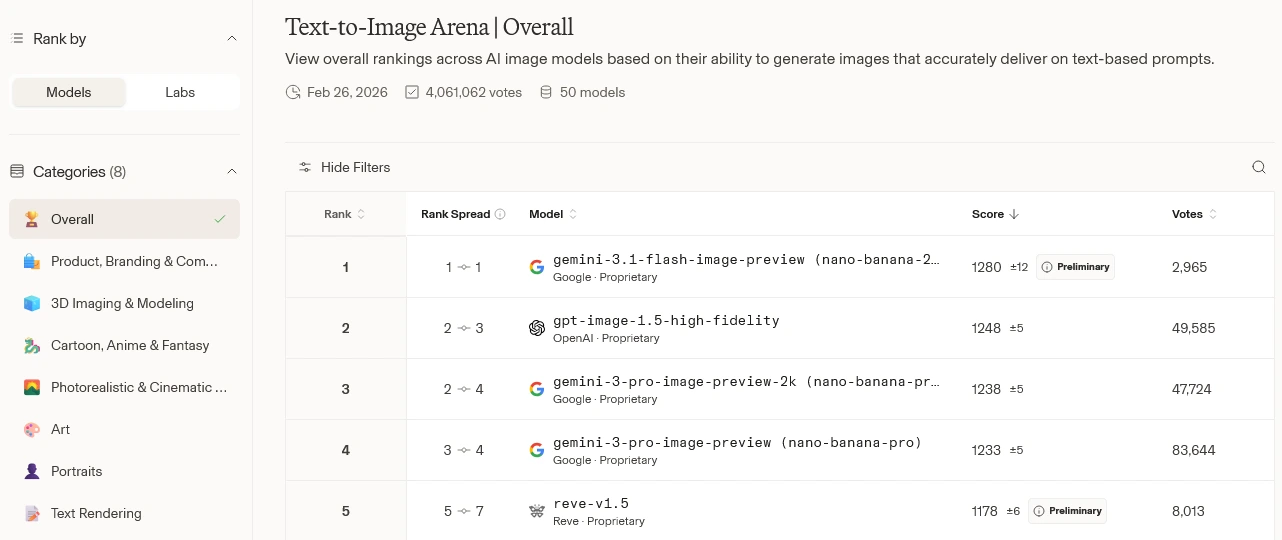
On the day it launched, Nano Banana 2 jumped straight to #1 on the Text-to-Image Arena overall leaderboard — beating GPT-image-1.5-high-fidelity (score 1248) and both Nano Banana Pro variants (1238 and 1233). Nano Banana 2 scored 1280.
One thing to keep in mind: it’s marked “Preliminary” and only has 2,965 votes so far. Pro has 83,644 votes. So the score will probably shift as more people vote. But still — a blind human preference test is the most honest benchmark out there, and first impressions are strong.
What’s New in Nano Banana 2
A few things Nano Banana 2 has that Pro doesn’t:
- Web search grounding — it can look up real images from the web while generating, which helps with accuracy on real-world subjects
- Thinking levels — you can tell the model to “think harder” before generating (useful for complex prompts)
- More aspect ratios — new 4:1, 1:4, 8:1, and 1:8 options
- 512px resolution — a smaller, faster option for when you’re just testing ideas
- Subject consistency — keeps up to 5 characters and 14 objects looking the same across multiple images
- Text in images — better at rendering readable text, and can even translate it into other languages
Test 1: Photorealistic Scene
The Prompt:
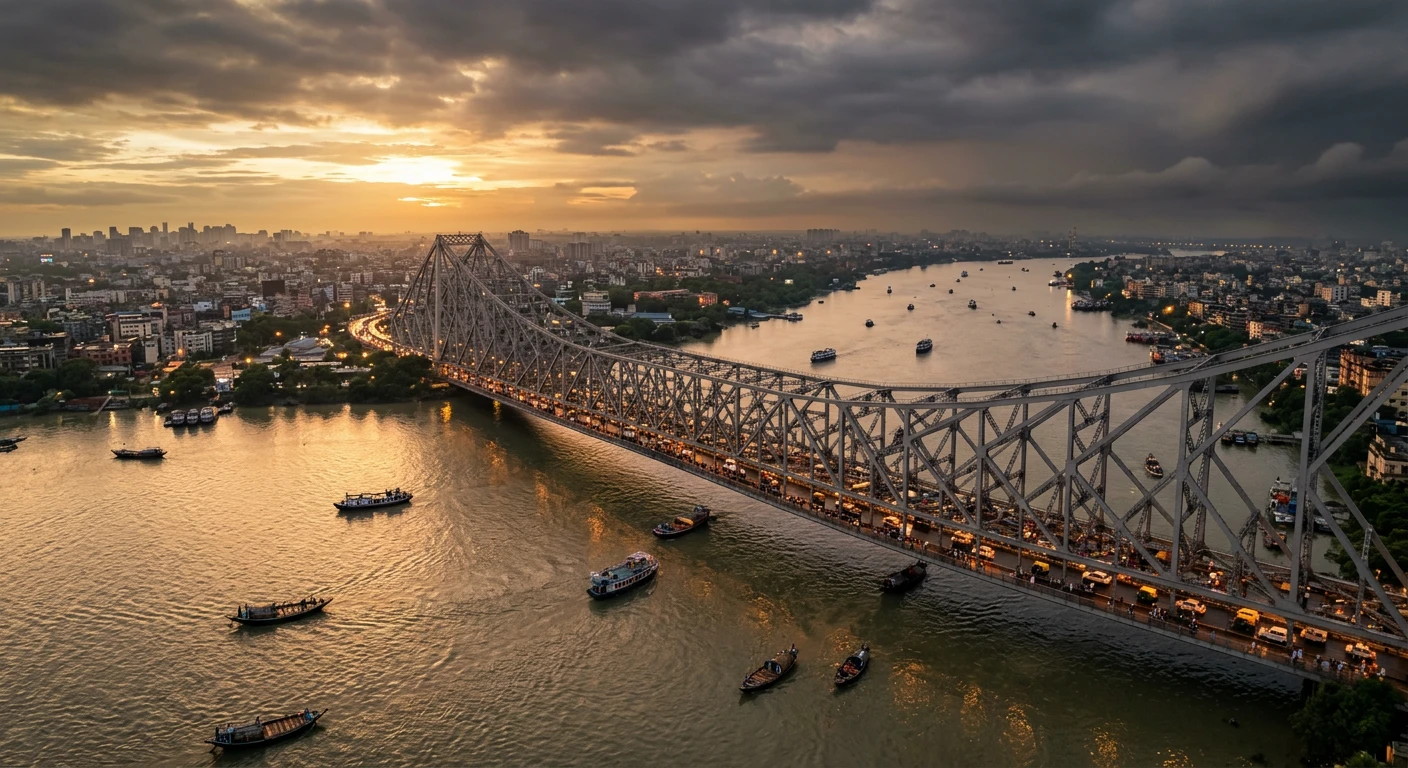
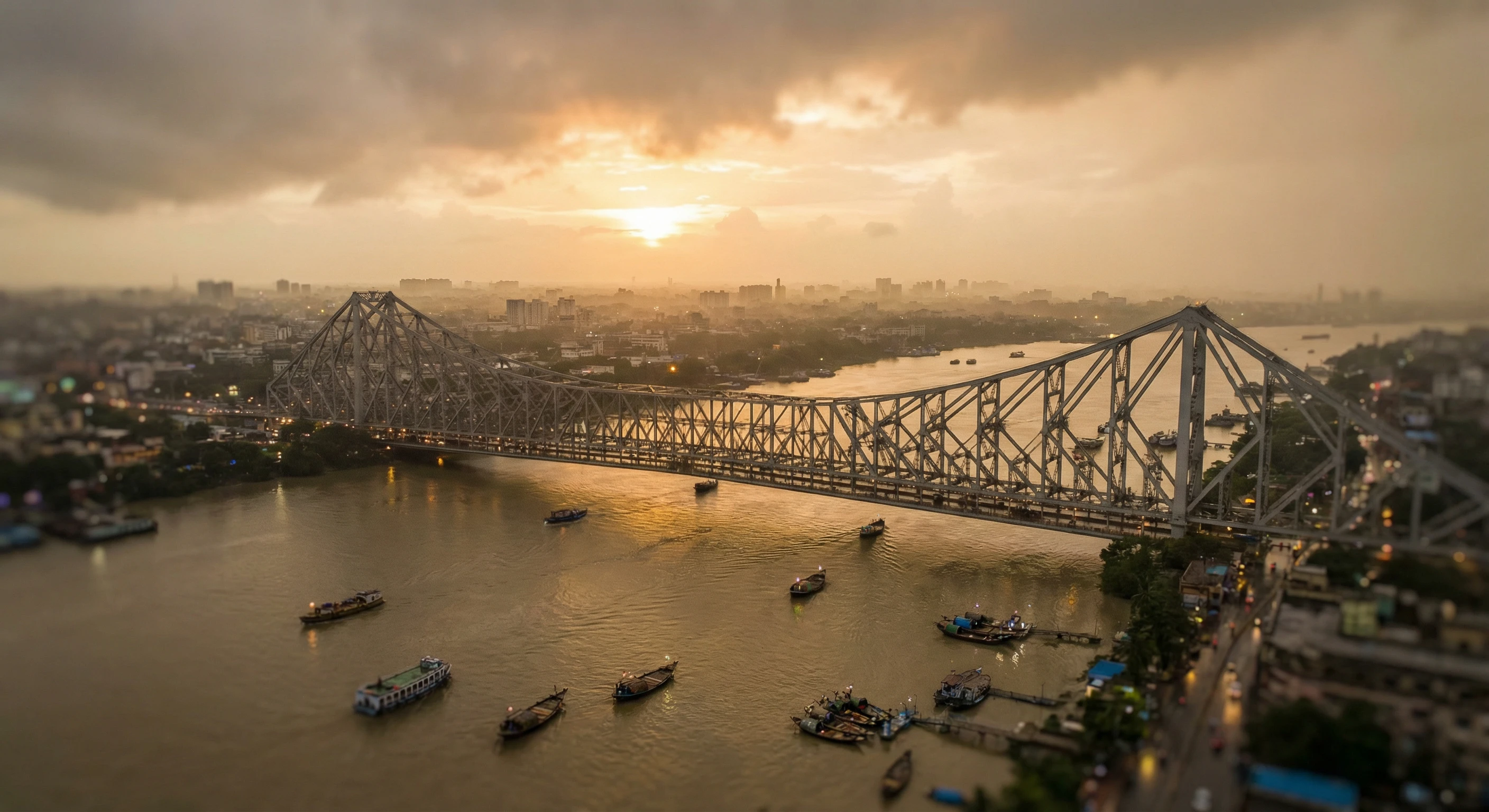
“A photorealistic aerial view of a monsoon evening over the Howrah Bridge in Kolkata, golden-hour light reflecting off the Ganges, boats below, cinematic depth of field, 4K.”
Nano Banana 2
Nano Banana Pro
What we think:
Nano Banana 2’s image looks great. Warm golden light, clear bridge, boats on the river — it checks all the boxes. But it feels like a beautiful AI image of a generic bridge at sunset.
Nano Banana Pro’s image feels like an actual photo of Kolkata. The light is more muted and realistic, the way the sky actually looks before a monsoon. The city on both sides of the river, the colour of the water — it feels like a real place you could visit.
If you just need a pretty image, Nano Banana 2 is fine. If you need it to actually look like Kolkata, Pro is noticeably better.
🏆 Winner: Nano Banana Pro.
Test 2: Comic Panel / Character Art
The Prompt:
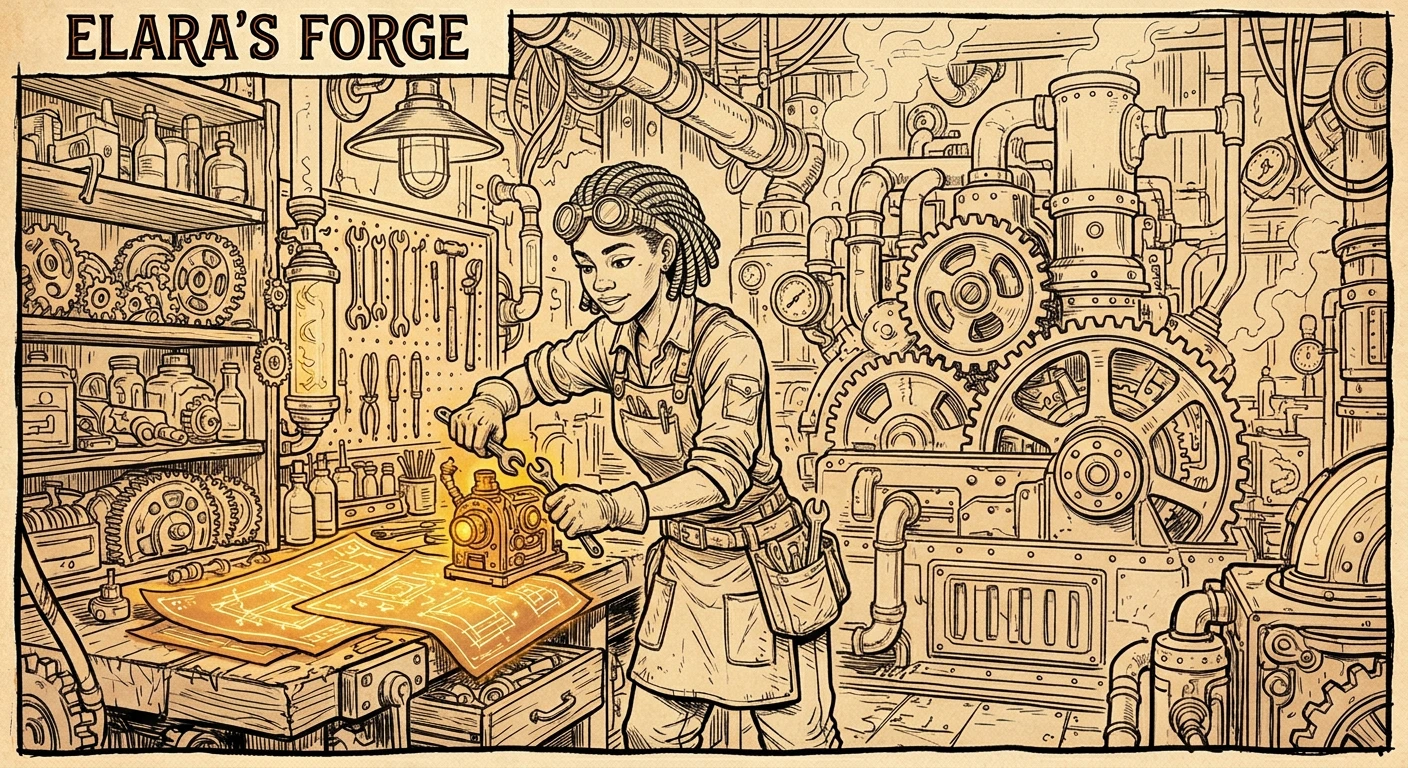
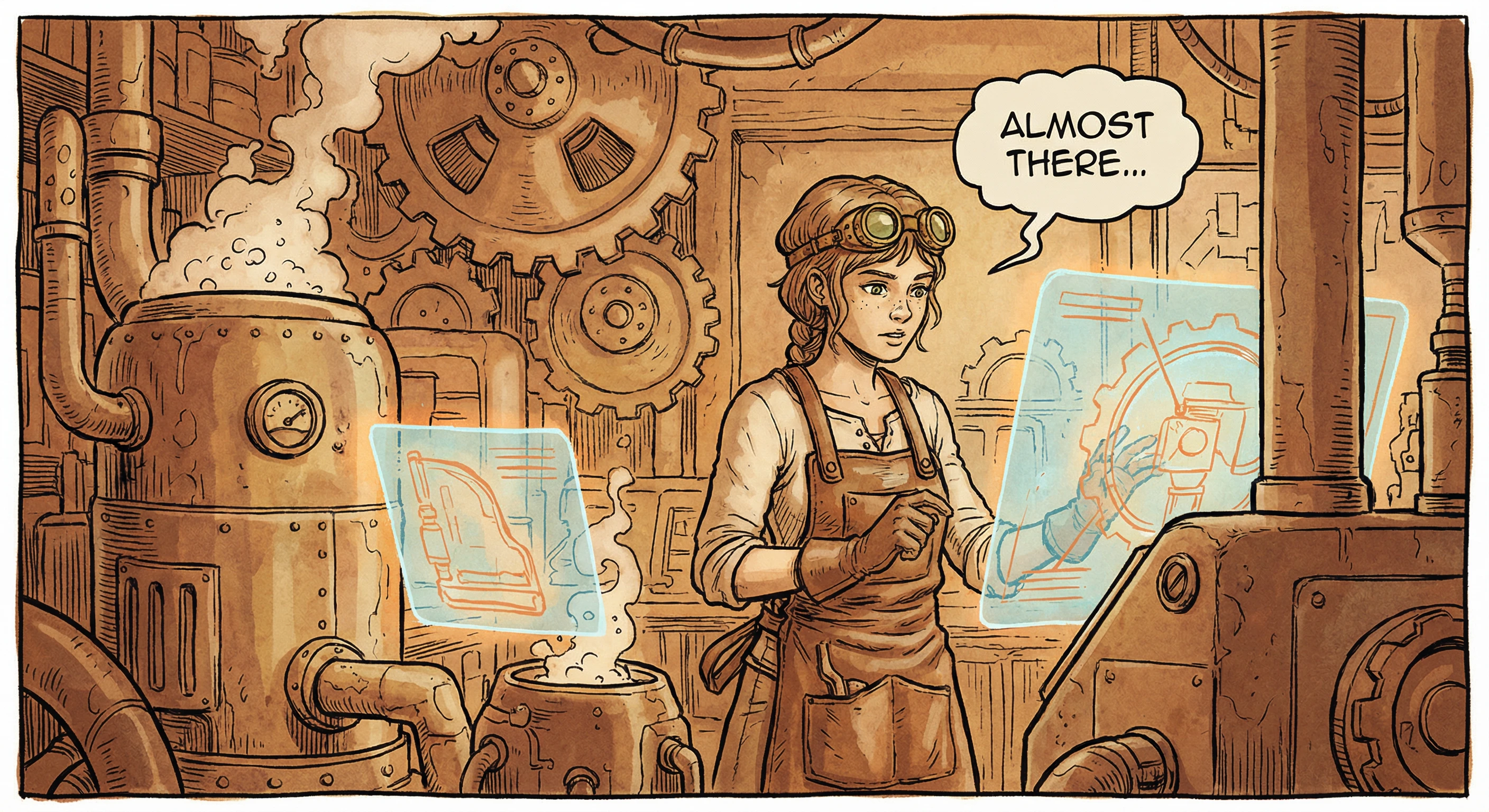
“A stylized graphic novel panel featuring a young woman inventor with short braided hair and brass goggles, standing inside a steam-powered workshop filled with gears and glowing blueprints. Warm amber tones, Moebius-inspired line art.”
Nano Banana 2
Nano Banana Pro
What we think:
Nano Banana 2 gave us an actual comic panel — the right art style, a speech bubble with text in it, the character and setting matching the prompt closely. It read the brief and delivered it.
Nano Banana Pro made a really detailed, gorgeous illustration. The linework is more intricate and it looks more crafted overall. But there’s no speech bubble, and it feels more like a book illustration than a comic panel. It got the style right but missed the format.
This is the test where Nano Banana 2 surprised us. When you need the model to follow your instructions precisely, it does a better job.
🏆 Winner: Nano Banana 2.
Test 3: Magazine Cover / Marketing Design
The Prompt:
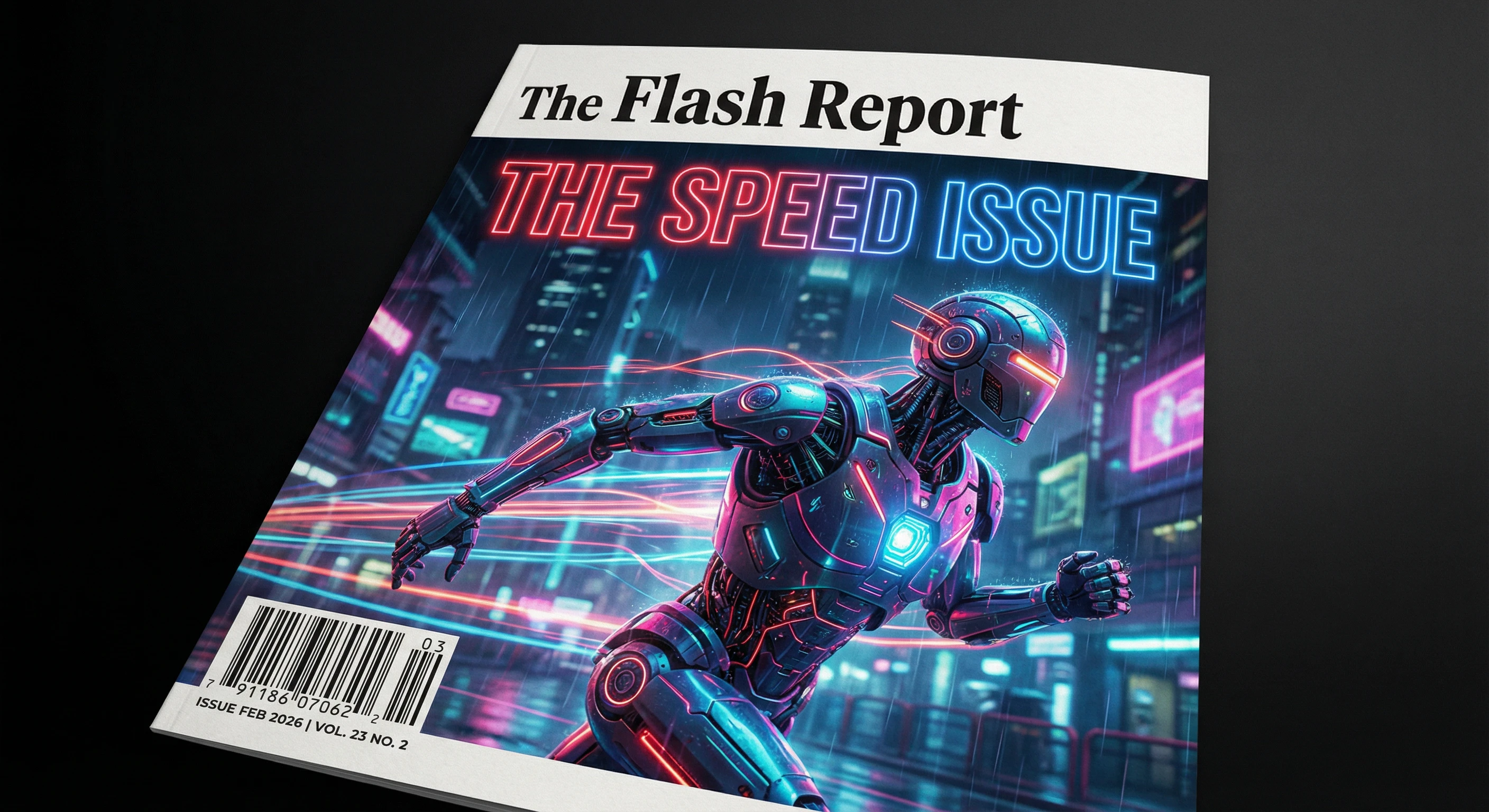
“A bold magazine cover mockup for a fictional tech journal called ‘The Flash Report’. Large serif headline text reading ‘The Speed Issue’, a neon-lit robot on the cover, barcode, issue date Feb 2026, clean editorial design, 4K resolution.”

Nano Banana 2
Nano Banana Pro
What we think:
Nano Banana 2 made a 3D mockup of a magazine sitting on a table. It looks cool as a visual — the robot and neon aesthetic are nice. But it’s a photo of a magazine, not an actual magazine cover. There are barely any article teasers or layout details.
Nano Banana Pro made a full, real-looking magazine cover. Article headlines, ISSN number, price in USD and GBP, volume number — everything you’d actually see on a newsstand magazine. It understood what a magazine cover is, not just what one looks like.
This is the biggest gap between the two models in our test.
🏆 Winner: Nano Banana Pro — by a lot.
So Which One Should You Use?
| Feature | Winner |
|---|---|
| Photorealistic accuracy | Nano Banana Pro |
| Following your prompt precisely | Nano Banana 2 (small margin) |
| Structured design with text | Nano Banana Pro |
| Speed | Nano Banana 2 |
| Price | Nano Banana 2 (2x cheaper) |
| Extra features | Nano Banana 2 |
Nano Banana 2 is not better than Pro at everything. For photorealism and design-heavy tasks, Pro still wins. But for most things people actually use image generation for — creative work, illustrations, quick concepts, building apps — Nano Banana 2 is faster, cheaper, follows instructions better, and already ranks higher in blind human testing.
The simple version: start with Nano Banana 2. Switch to Pro only when you need that last bit of photorealistic detail or structured design quality, and you’re okay paying twice as much for it.
For developers and anyone building at scale, Nano Banana 2 is the obvious default. You get web grounding and thinking levels that Pro doesn’t even have, at half the cost.
Where to Try Them
Both are available in Google AI Studio and the Gemini API with a paid API key. Enterprise users can access both on Vertex AI. In the Gemini app, Nano Banana 2 is now the default — Pro is still there via the three-dot menu if you’re on AI Pro or Ultra.
We tested both models in Google AI Studio on February 27, 2026, using the exact same prompts with no other settings changed. Pricing from Google AI Studio. Arena rankings from lmarena.ai, February 27, 2026.