The old B2B SaaS marketing playbook — blog → SEO → lead magnet → nurture sequence → demo booked — is still working. But it’s working noticeably less well than it did three years ago.
This isn’t because marketing fundamentals changed. It’s because everyone is doing the same thing, better than ever, with AI. The bar to look credible has dropped to zero. Which means credibility alone no longer converts.
Here’s what’s shifting, and what’s actually driving pipeline for B2B software companies in 2026.
The Death of the Generic Blog
Let me be direct: if your company blog reads like it could have been written by any five competitors, it’s not an asset — it’s a cost center.
The companies seeing SEO returns in 2026 are publishing in one of two modes:
- Subject matter expert content — pieces written or heavily reviewed by people who’ve lived the problem. Practitioners, not content marketers pretending to be practitioners.
- Data-driven original research — studies, benchmarks, and surveys that journalists and other blogs cite, creating authority backlinks at scale.
Generic “X tips for Y” content, even well-optimized, is being outranked by either AI-generated comprehensive guides or by the rare pieces that actually have a unique point of view.
If you can’t clearly articulate why your content would be cited over a competitor’s, rethink the piece.
LinkedIn Is Now the Top of the Funnel for B2B
Search intent is great for capturing buyers who already know they have a problem. But the largest pipeline opportunity in B2B SaaS right now is creating demand before someone searches.
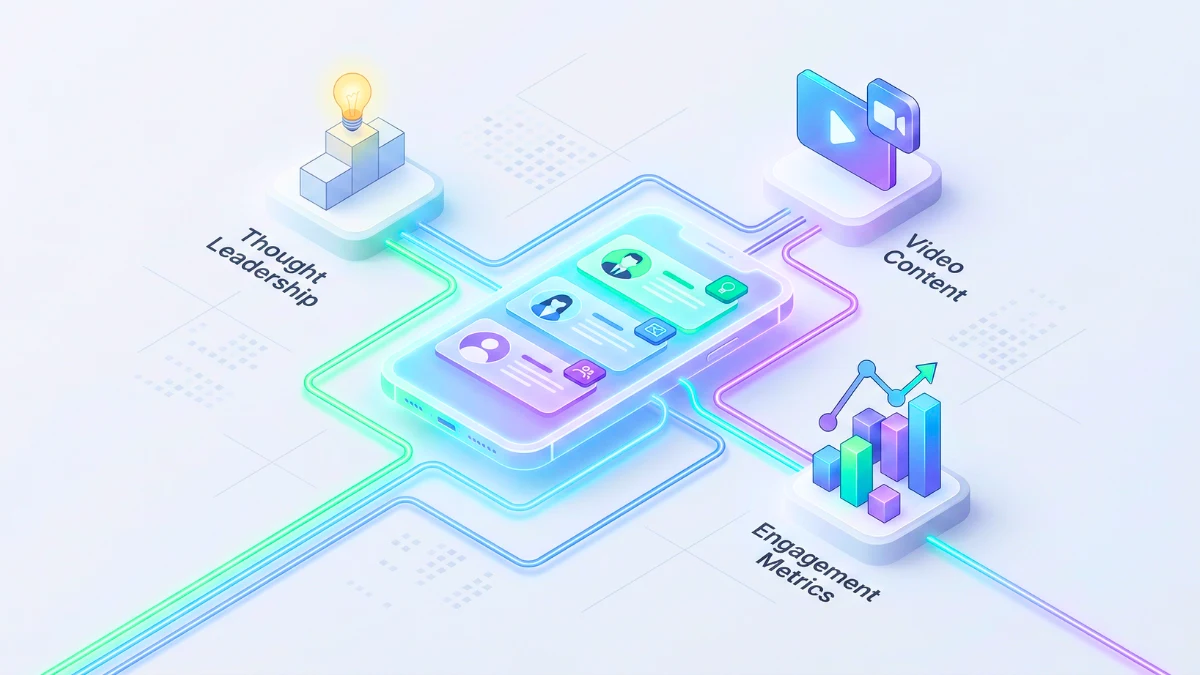
LinkedIn has quietly become the most underpriced distribution channel for this:
- Organic reach for individual thought leaders is still strong — company pages less so
- B2B buyers scroll LinkedIn professionally; the context is right
- Video and document carousels are significantly outperforming link posts
The formula that’s working: your best people (founder, head of product, senior CS leaders) posting raw, specific, practitioner-level insights 3–4 times a week. Not polished brand content. Not repurposed blog excerpts.
It takes 3–4 months to build an audience, but the pipeline attribution is often unexpectedly strong.
Product-Led Content Has Replaced Thought Leadership
“Thought leadership” became a meaningless buzzword because its definition drifted. It turned into opinion pieces designed to look impressive rather than help anyone.
What converts in 2026 is product-led content: content built around the exact problems your product solves, published at the moment your buyer is experiencing them.
This means:
- Use-case libraries — “How [customer type] uses [product] to do [specific thing]”
- Integration guides — showing how your tool fits into the stack your ICP already uses
- Comparison content — honest, detailed comparisons to competitors (yes, including the areas where they’re stronger)
- Workflow templates — downloadable, immediately usable assets that create a product touchpoint without requiring a demo
The best SaaS companies have blurred the line between content and product. Notion’s template gallery, Airtable’s base examples, Linear’s workflow guides — these are marketing assets that also create product habit.
Email Is Surprisingly Healthy — If You Treat It Like a Product
Email open rates didn’t die. But the “newsletter” as a form has bifurcated:
High performers: Branded editorial newsletters with distinct editorial voice, consistent cadence, and clear niche. These audiences are loyal, engaged, and often purchased.
Low performers: “Monthly product updates” and “content roundups” assembled by a coordinator. These get ignored, unsubscribed, or marked as spam.
If you’re investing in email, the question to ask is: would someone pay for this? If the honest answer is no, the email marketing budget is probably better deployed elsewhere.
What to Stop Doing
Based on what’s actually working versus what just feels productive:
Stop gating mid-funnel content. Requiring email for a guide that’s already widely available elsewhere doesn’t build pipeline — it just annoys the people who already know your brand.
Stop sponsoring podcasts at scale. Podcast CPM has increased while attribution has stayed murky. Category-specific niche podcasts still work. Mass-market “business” podcasts rarely do.
Stop measuring MQLs as a primary metric. Marketing Qualified Leads correlate poorly with close rates. The teams seeing real sales alignment are measuring pipeline contribution, not form fills.
What to Double Down On
- Community building — owning a Slack group, forum, or in-person community for your ICP is expensive to build but extraordinarily defensible
- Partnerships with adjacent tools — co-marketing with complementary products gets your brand in front of buyers evaluating your category
- Retargeting with use-case specificity — retargeting based on which use-case page they viewed, with ads specific to that use case, is uncommon and significantly higher-converting
The companies growing fastest in 2026 are not doing dramatically different tactics — they’re doing the same ones with dramatically higher specificity. The era of spray-and-pray B2B content is over.