Agentic AI — systems that can plan, reason, and take multi-step actions with minimal human input — has crossed the line from research novelty to enterprise reality in 2026. If you’re a founder, CTO, or business leader and you haven’t started thinking about how autonomous agents will change your operations, now is the time.
What Is Agentic AI, Exactly?
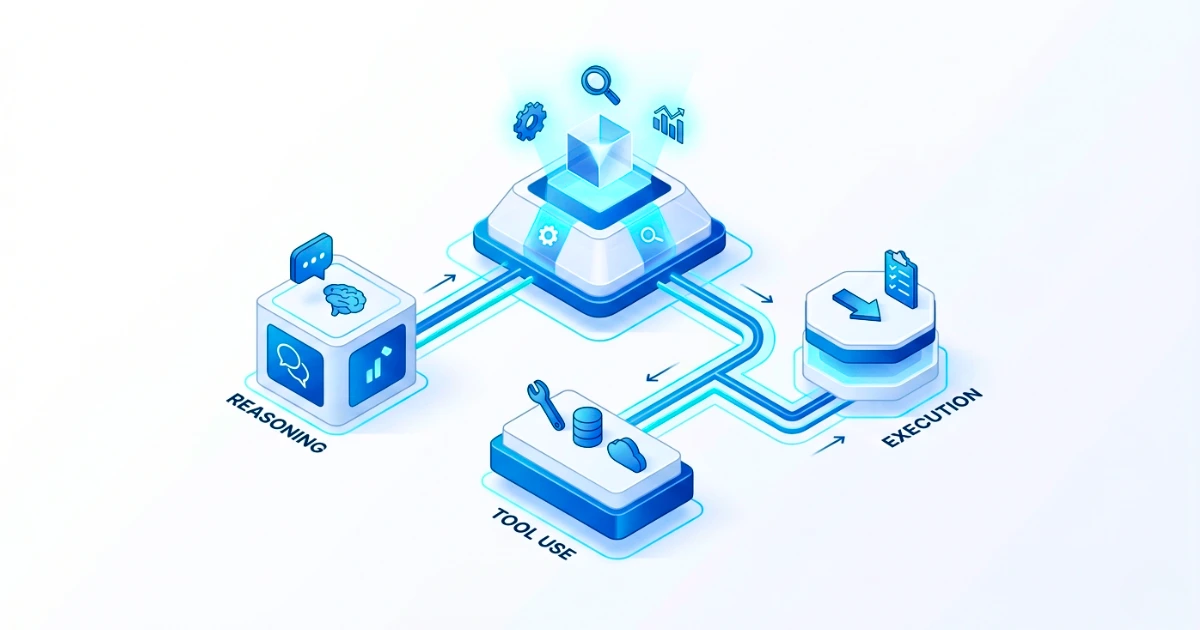
Unlike a simple chatbot that answers one question at a time, an AI agent can:
- Receive a high-level goal (e.g., “Prepare a weekly report on our top 10 customer accounts”)
- Break it down into subtasks
- Use tools (search the web, query a database, send emails, write code)
- Iterate and course-correct if something fails
- Deliver a result — often without any human steps in between
The underlying LLMs (like GPT-4o, Claude 3.5, and Gemini 2.0) have become capable enough to serve as reliable “reasoning engines” for these agents, while frameworks like LangChain, CrewAI, and AutoGen handle the orchestration.
Real Enterprise Use Cases in 2026
1. Sales Development Representatives (SDR) Automation
Companies are deploying AI agents that autonomously:
- Research prospects from LinkedIn, company websites, and news
- Write personalized outreach emails
- Follow up, handle objections, and book meetings
- Hand off qualified leads to human sales reps
Reported result: 60-70% reduction in SDR headcount cost, with 2-3x more outreach volume.
2. IT Operations & Incident Response
Agentic AI systems monitor infrastructure, detect anomalies, diagnose root causes, and — in many cases — resolve incidents automatically before a human is paged.
3. Finance & Reporting
Monthly close processes that took 2 weeks of analyst time are being compressed to 2 days with agents that pull from ERP systems, reconcile data, flag anomalies, and generate draft reports.
What Leaders Should Do Now
- Run a pilot in one domain — pick a high-repetition, rule-bound process and test an agent against it
- Audit your data readiness — agents are only as good as the data they can access; clean, structured data is essential
- Establish a governance framework now — define what agents can and cannot do autonomously, and build human-in-the-loop checkpoints for high-stakes decisions
The organizations that will win in the next 3 years aren’t the ones with the largest AI budgets — they’re the ones that systematically identify where autonomous agents can compress time and cost, and ship quickly.
Have thoughts on how agents are changing your industry? Contact us — we’d love to hear from you.